Dryer Making Noise in Intracoastal West
Thumping in rhythm, squealing at startup, rumbling that grows, a metallic scrape. Dryer noises are unusually honest — the round parts that fail announce themselves in order.
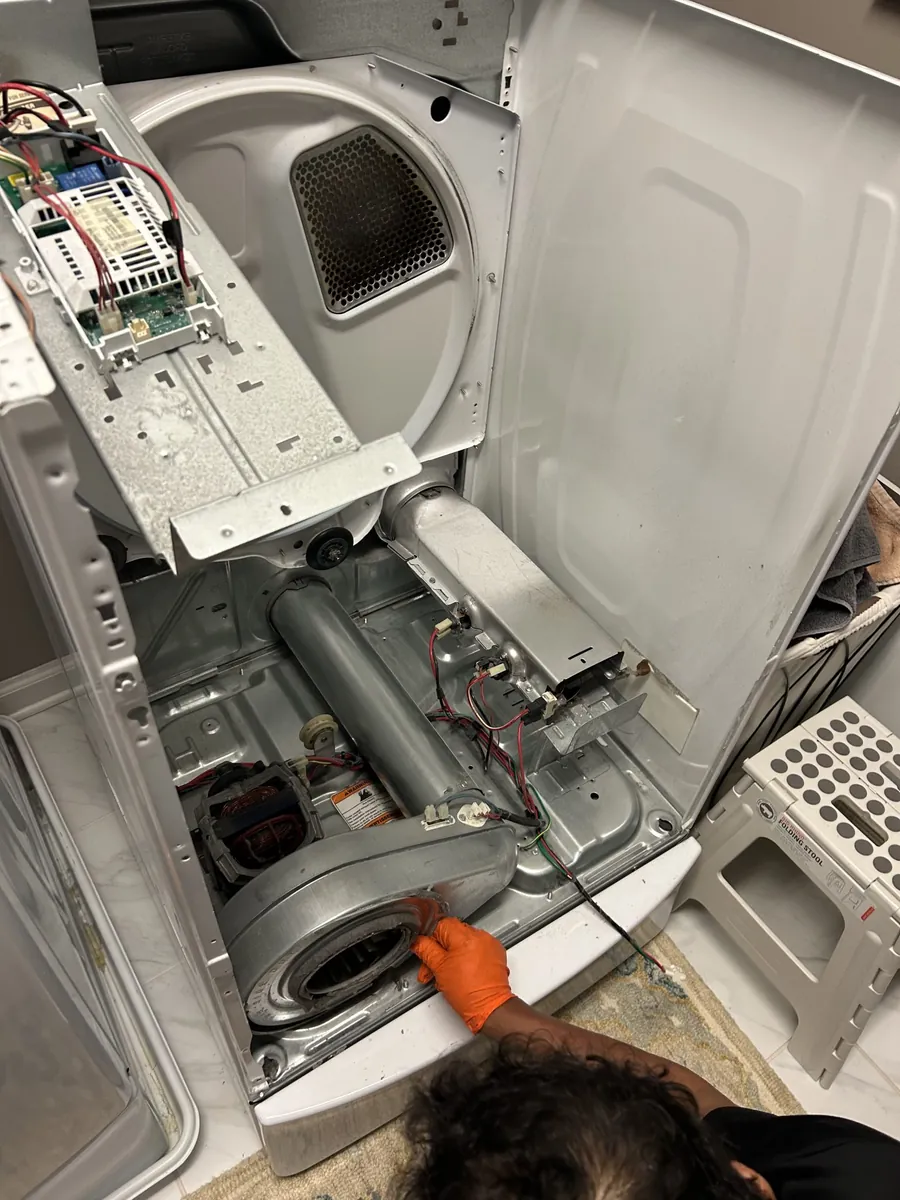
What's going on with your dryer
A dryer is a big drum turning on small parts: rollers, glides, an idler pulley, a belt, a blower. Each wears on its own schedule and makes its own sound. The diagnostic art is matching rhythm and timing — a thump once per drum revolution, a squeal that fades as it warms, a rumble under everything. Noises caught at the 'annoying' stage are cheap; the same parts at the 'seized' stage take belts and motors with them.
Intracoastal West sits about 13 miles from Downtown Jacksonville, part of the wider metro — pros based across the city cover it on their regular rounds.
How urgent is it? Book at the 'annoying' stage and it's a modest visit. Wait for seizure or a shredded belt and the bill grows by the parts it takes with it.
What causes dryer making noise
Every one of these is found by testing, not guessing — the diagnostic confirms which one you have before any part is quoted.
What you can safely check yourself
- Character and rhythm: thump (per-revolution?), squeal (startup only?), rumble (constant?), scrape (front or back?). Describing it well is half the work order.
- Record it on your phone — 15 seconds of audio beats three adjectives, especially for noises that perform only under load.
- Run it empty: noises that persist empty are the machine's; noises that vanish were buttons and buckles all along.
- Check the drum baffles inside for a trapped coin edge — run a hand (carefully, machine off) along the drum seams.
What a technician checks
The drum is spun by hand and under power with panels off; each rotating support is isolated — rollers, idler, glides, bearing, blower — until the sound's source is physically identified. Wear parts on dryers are typically replaced in their wear set (rollers with their shafts cleaned and checked, idler with the belt inspected), because the parts that share a decade share a fate.
Parts most often involved in this repair: drum rollers, idler pulleys, drive belts, glide kits, drum bearings and blower wheels. Each is identified against your exact model number — no universal substitutes.
How it works: call the number on this page and describe what’s wrong. A local appliance repair professional who covers your area answers, runs the appliance, tests the systems the symptom points to, identifies the failed part by model number, and quotes one total for the complete repair — before starting. You decide with the full price in front of you.
Dryer Making Noise in Intracoastal West — questions
Why does my dryer thump once every few seconds?
That's a flat-spotted drum roller (or a drum seam) marking each revolution. Rollers flatten where the drum rests between loads, then wear into a rhythm section.
Is a squealing dryer safe to keep using?
For a short while — squeals are bearings asking politely. They escalate to seizures, and a seized idler shreds belts. Book it while it's still polite.
Why is my dryer suddenly loud after being moved?
Moves disturb things: a shifted blower, a dented cabinet touching the drum, a loosened vent clamp rattling. New-after-move noises deserve a look behind the machine before a parts list.
Dryer repair in Intracoastal West
This problem in nearby areas
More dryer problems in Intracoastal West
Dryer error codes in Intracoastal West
Not in Intracoastal West? Read the general guide: Dryer Making Noise · All appliance problems & error codes · See every neighborhood in the service area
Get a quote for dryer repair in Intracoastal West
Call to get a quote — describe the appliance and the problem, and a local pro who covers your neighborhood will go over timing and price with you directly.
Prefer to read first? Browse the problem guides — causes, safe checks, and the parts usually involved.
Get a quote from a local pro
Call the number below and describe the appliance and the problem. A local appliance repair professional who covers your neighborhood answers — the pro goes over timing and price with you directly, and quotes the full repair before any work starts.
How it works
1. Call and describe what's wrong.
2. Get connected with a local pro who covers your area.
3. The pro diagnoses, quotes the full repair up front, and fixes it on your go-ahead.
Prefer to read first? Browse the problem guides — causes, safe checks, and the parts usually involved.