Freezer Not Freezing in Springfield
Ice cream is soft, ice cubes are shrinking, and the freezer hovers in the 20s instead of 0°F. When the coldest part of the fridge gives up first, the cause is usually specific — and findable.
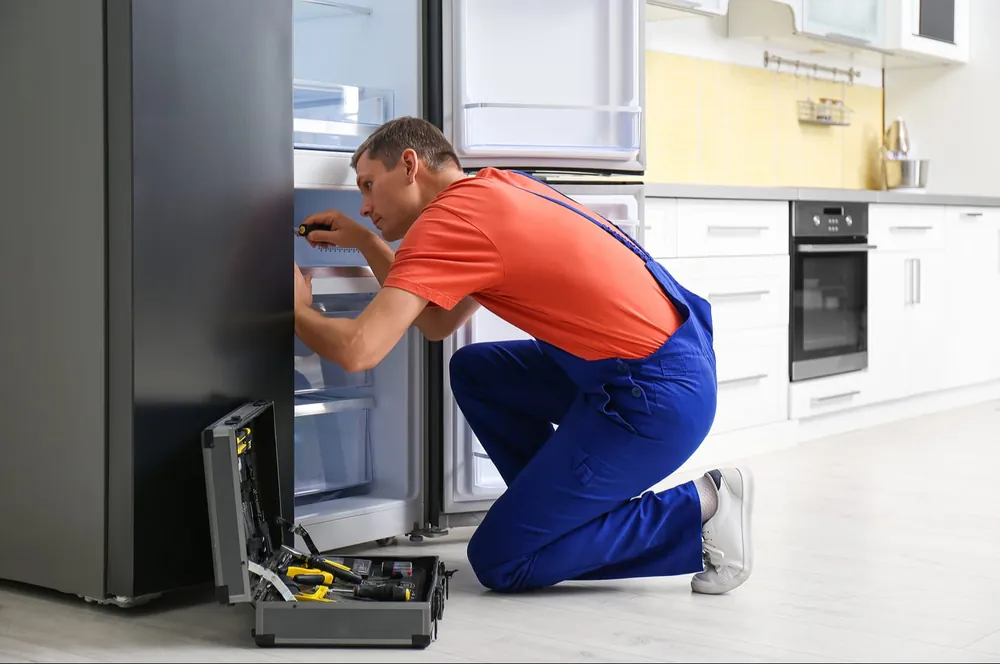
What's going on with your refrigerator
The freezer should hold about 0°F. When it can't get there, ice cream is the first casualty (it softens around 10°F), then ice production slows and frozen food starts losing its margin. Because the freezer is where the cold is actually made, a freezer that won't freeze points closer to the source than most symptoms: the coil, the fan, the defrost cycle, or the sealed system itself.
Springfield sits about 0 miles from Downtown Jacksonville, inside the core metro — local pros cover it daily.
How urgent is it? Frozen food has more margin than fresh, but a freezer stuck above 20°F is quietly degrading everything in it. Fast or next-morning service is the right call.
What causes freezer not freezing
Every one of these is found by testing, not guessing — the diagnostic confirms which one you have before any part is quoted.
What you can safely check yourself
- Put a thermometer in the freezer for a few hours — 'cold to the touch' can still be 25°F, too warm for safe long-term storage.
- Check that the freezer isn't packed so tightly that air can't circulate, and that nothing blocks the vents on the back wall.
- Run a finger along the door gasket: cracks, tears or spots where it doesn't touch the cabinet let warm air pour in.
- Note whether the compressor seems to run nearly all the time — constant running plus a warm freezer is a key diagnostic clue.
What a technician checks
Diagnosis starts with real temperatures, not impressions: measured freezer and fridge readings, then the evaporator's frost pattern — a coil frosted corner-to-corner tells a different story than one frosted solid, and a bare coil points at the sealed system. The fan, defrost components and compressor draw are tested in sequence until the failure is proven.
Parts most often involved in this repair: defrost heaters and thermostats, evaporator fan motors, door gaskets, condenser fan motors and start relays. Each is identified against your exact model number — no universal substitutes.
How it works: call the number on this page and describe what’s wrong. A local appliance repair professional who covers your area answers, runs the appliance, tests the systems the symptom points to, identifies the failed part by model number, and quotes one total for the complete repair — before starting. You decide with the full price in front of you.
Freezer Not Freezing in Springfield — questions
What temperature should my freezer be?
0°F is the standard target. Ice cream stays hard below about 10°F, so soft ice cream is a reliable early-warning sign that the freezer is running 10–20 degrees warm.
Why is my freezer cold but not freezing?
Cool-but-not-frozen usually means reduced capacity rather than total failure: partial airflow loss from frost or a weak fan, dirty condenser coils, or a sealed system losing efficiency. The diagnostic measures which one.
Can a bad door gasket keep a freezer from freezing?
Yes — a gasket leak is a constant warm-air load the system has to fight 24 hours a day. It's also one of the cheapest causes on this page to fix.
Refrigerator repair in Springfield
This problem in nearby areas
More refrigerator problems in Springfield
Refrigerator error codes in Springfield
Not in Springfield? Read the general guide: Freezer Not Freezing · All appliance problems & error codes · See every neighborhood in the service area
Get a quote for refrigerator repair in Springfield
Call to get a quote — describe the appliance and the problem, and a local pro who covers your neighborhood will go over timing and price with you directly.
Prefer to read first? Browse the problem guides — causes, safe checks, and the parts usually involved.
Get a quote from a local pro
Call the number below and describe the appliance and the problem. A local appliance repair professional who covers your neighborhood answers — the pro goes over timing and price with you directly, and quotes the full repair before any work starts.
How it works
1. Call and describe what's wrong.
2. Get connected with a local pro who covers your area.
3. The pro diagnoses, quotes the full repair up front, and fixes it on your go-ahead.
Prefer to read first? Browse the problem guides — causes, safe checks, and the parts usually involved.