Refrigerator Freezing Food in Hastings & Elkton
Lettuce frozen solid, eggs cracking, milk slushy — in the fresh-food section. A refrigerator that freezes food is overcooling on purpose or by accident, and the cause is specific.
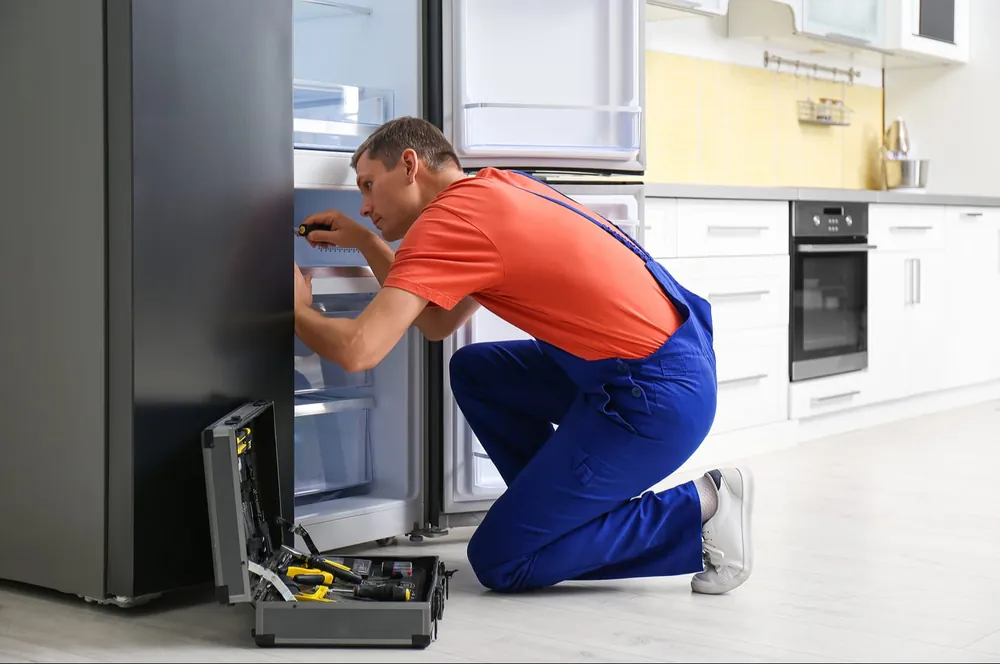
What's going on with your refrigerator
The fresh-food section should sit between 35°F and 40°F. When it dives into the 20s, produce wilts black, liquids freeze in their containers, and the back-wall items go first. Overcooling comes from the airflow controls (a damper stuck open), the sensors that report temperature, or simply settings and placement — and the fix follows from which, so the diagnostic measures real section temperatures instead of trusting the dial.
Hastings & Elkton sits about 41 miles from Downtown Jacksonville, on the edge of the metro — covered by pros who run the outlying suburbs as part of their regular rounds.
How urgent is it? Annoying and wasteful rather than dangerous — frozen produce is lost, but nothing spoils in the unsafe direction. Book a convenient slot within the week.
What causes refrigerator freezing food
Every one of these is found by testing, not guessing — the diagnostic confirms which one you have before any part is quoted.
What you can safely check yourself
- Measure it: a thermometer in a glass of water on a middle shelf for several hours gives the true section temperature.
- Check both controls — the freezer setting influences the fridge more than most people expect on single-evaporator models; 'coldest' on both is a common accident.
- Move sensitive produce away from the back wall and the vent outlet and see if the pattern follows the food or the location.
- Note whether the compressor seems to run nearly constantly — stuck dampers and failed sensors usually announce themselves that way.
What a technician checks
Diagnosis is measurement first: actual section temperatures versus what the control believes, sensor resistance against its temperature chart, damper travel through a full open-close command, and compressor cycle pattern. The component whose story doesn't match the thermometer is the one that gets replaced.
Parts most often involved in this repair: damper assemblies, temperature sensors (thermistors), thermostats and control boards. Each is identified against your exact model number — no universal substitutes.
How it works: call the number on this page and describe what’s wrong. A local appliance repair professional who covers your area answers, runs the appliance, tests the systems the symptom points to, identifies the failed part by model number, and quotes one total for the complete repair — before starting. You decide with the full price in front of you.
Refrigerator Freezing Food in Hastings & Elkton — questions
Why is food freezing only at the back of my fridge?
The back is where the cold air enters. If only back items freeze while the section temperature is right, it's airflow placement. If everything freezes, the control system is overcooling the whole section.
Can a bad sensor make a refrigerator freeze food?
Yes — the control trusts its sensor completely. A sensor lying by ten degrees produces a cabinet ten degrees too cold, with every other part working perfectly.
What temperature should the fresh-food section be?
Between 35°F and 40°F — 37°F is the usual target. Below 32°F you're freezing food; above 40°F you're in the spoilage zone.
Refrigerator repair in Hastings & Elkton
This problem in nearby areas
More refrigerator problems in Hastings & Elkton
Refrigerator error codes in Hastings & Elkton
Not in Hastings & Elkton? Read the general guide: Refrigerator Freezing Food · All appliance problems & error codes · See every neighborhood in the service area
Get a quote for refrigerator repair in Hastings & Elkton
Call to get a quote — describe the appliance and the problem, and a local pro who covers your neighborhood will go over timing and price with you directly.
Prefer to read first? Browse the problem guides — causes, safe checks, and the parts usually involved.
Get a quote from a local pro
Call the number below and describe the appliance and the problem. A local appliance repair professional who covers your neighborhood answers — the pro goes over timing and price with you directly, and quotes the full repair before any work starts.
How it works
1. Call and describe what's wrong.
2. Get connected with a local pro who covers your area.
3. The pro diagnoses, quotes the full repair up front, and fixes it on your go-ahead.
Prefer to read first? Browse the problem guides — causes, safe checks, and the parts usually involved.